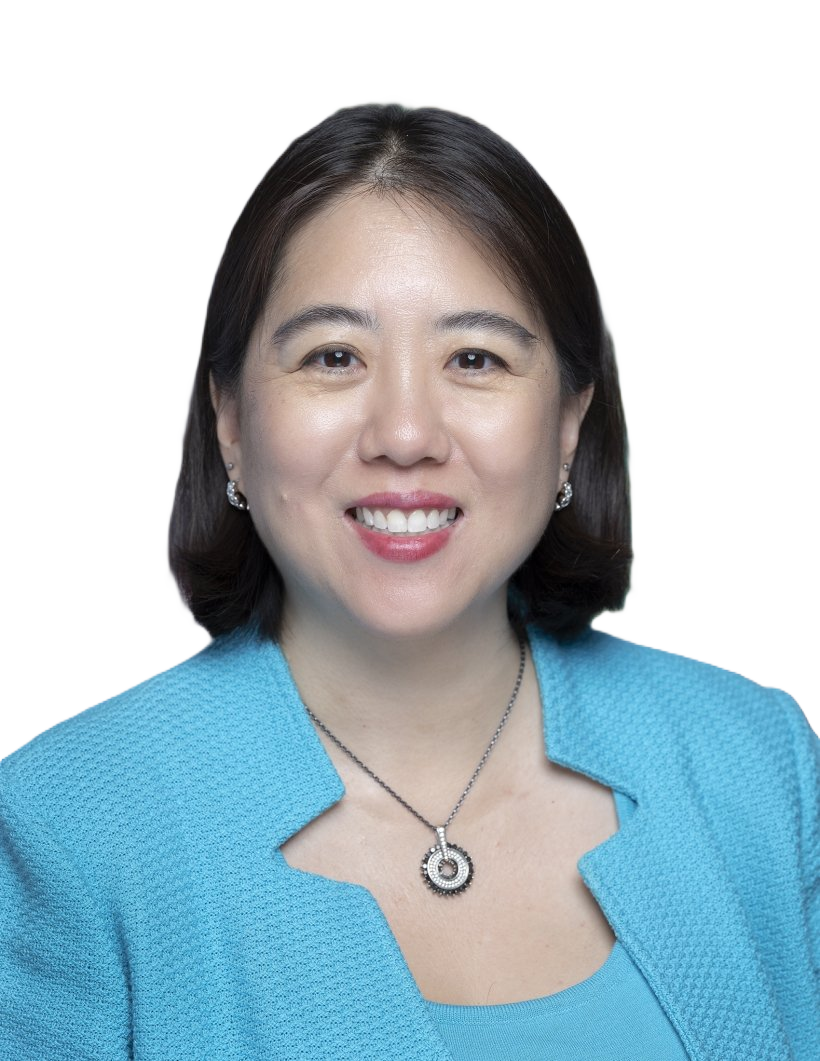
John Belizaire | CEO of Soluna (NASDAQ: SLNH)
2022-07-29
In this episode, we will be talking to John Belizaire, who is the CEO of Soluna, a company helping to shape the future of renewable energy development. Soluna Holdings, Inc. (Nasdaq: SLNH) is currently the leading developer of green data centers that convert excess renewable energy into global computing resources. Prior to starting Soluna and early in his career, Mr. Belizaire was the recipient of the Intel Scholarship Program and after receiving his computer science and engineering degree from Cornell University, went on become the lead architect for Intel’s Digital Enterprise Group. He then subsequently founded a software start-up company, which he later sold for $150 million.
Topics discussed in this this interview:
- Renewable Energy Transition & Its Biggest Challenge: Wasted Energy
- Computing Is A Better Battery: Why Sustainable Computing Is Ready For Scale Now & Can Be The Best Catalyst For Making Renewable Energy A Superpower Cryptocurrency Mining, Blockchain & Why They Are Important Technologies That Can Fuel Future Energy
- The Future Of The Grid: How It Can Provide Efficient Energy That Reduces Energy Poverty & Enhance Economic Equality Globally The Evolving Role Of The CEO And Entrepreneur
Transcript
Introduction
Are you looking to become a leader in clean energy and an expert in cleantech? Do you hope to get noticed in the crowd as you pursue a career in this fastly growing industry? You are in the right place. Join Karan Takhar as he invites clean energy leaders to share industry developments, highlight cleantech investment opportunities and shed light on how you can increase their chances of employment in this high-growth sector. We will also discuss the energy transition across key emerging markets like India and explore partnership opportunities for the US private and public sector. After all, this is the Zenergy podcast.
Karan Takhar
In this episode, we will be speaking to John Belizaire, who's the CEO of Soluna, which is a company helping to shape the future of renewable energy development; Soluna is currently the leading developer of green data centers that convert excess renewable energy into global computing resources prior to starting Soluna and early in his career, Mr. Belizaire was a recipient of the Intel Scholarship Program, and after receiving his computer science and an engineering degree from Cornell University, went on to become the lead architect for Intel's Digital Enterprise Group. He then subsequently founded a software startup company, which he later sold for $150 million. In this interview, we discuss several topics, including the renewable energy transition and its biggest challenge, the future of the grid, the evolving role of the CEO and entrepreneur, and how blockchain technology can shape the future of energy deployment. I hope you enjoy my conversation with Mr. John Belizaire.
Thank you so much, Mr. Belizaire, for taking the time and have been looking forward to speaking with you for people listening. I think it would be best to start at the beginning. Can you briefly tell us about your background and what ultimately LED you to start Soluna computing?
Thank you so much, Mr. Belizaire, for taking the time and have been looking forward to speaking with you for people listening. I think it would be best to start at the beginning. Can you briefly tell us about your background and what ultimately LED you to start Soluna computing?
John Belizaire
John Belizaire
I left Intel and moved to Boston to join my former grad school colleagues, and he started our first company, a company called Theory Center that was focused on the e-commerce space; this was just as the Internet then the web was taking off everyone was looking to move their back office or core systems if you will to the web so that they can do commerce and interface with this burgeoning new space and we built a set of software component that you could glue together like Lego blocks that can deliver solutions very quickly to the web and that company was my first real entrepreneurial experience with outside investors and figuring out how to build teams and culture and stuff like that and being CEO for the first time. Lots of learning took place in those two or so years that we built the company. We ultimately sold it to a very fast-growing public company in California, so I moved back from Boston to California to join that company.
We sold the business was doing about 15 million in revenue, 45 employees do or take and we read that business 10 times size within a 2 to the 3-year period which was a great experience for me I was part of a company that hit a billion dollars in revenue, the fastest ever in history had 50 plus officers around the world developing and selling software to help the world move to this new Internet mode I left that company, it's called Bea systems, and took a took a break, traveled around the world, and then came back and started an incubation company where we help young companies build out their technology team and then ultimately get ready for funding down to line and through that process we realized that we like building companies rather than investing in them and portion of my original Co-founders and the first company got back together and formed a company called First Best Systems that was focused on transforming the underwriting process for the insurance space but that company, over a decade or so it's now, has sort of launched a whole new industry and it's now known as insurtech and there's lots of pureplay insurance companies coming out of the out of the ground to reshape the insurance industry. We sold that to another big public company. It's now part of their entire solution stack, and after taking a year off, my mentor invited me to look at this project that he was working on.
John Belizaire
He'd been invested within all of my companies. he says working on something that's renewable energy and blockchain, and I was honestly not sure whether that was a that was a good fit for me because I'm a software guy. I don't know anything about renewables, but blockchain was very intriguing to me; that software, that software technology I'd like to learn more about it, and so I went to his private equity office, and that started a four-year journey to creating what is today known as Soluna and all the great things that we're doing. So that's a 20-plus-year journey I just went through that touches on a host of different things, and one thing I've noticed about myself is I tend to be attracted to new confluence, waves of technology change that introduce opportunities to innovate and, uh, I like building companies in sort of that innovation storm if you will that are groundbreaking, and you know, really break the mold on old ways and just a passion of mine. So that's a quick tour.Karan Takhar
Thank you for expanding on that.In order to get some.More insight into what it looks like to be an entrepreneur. Could you walk us through what a typical day looks like for you, if there is even a typical day?
John Belizaire
Yeah. If the listeners could see my calendar, they'd be shocked by what a typical day looks like for me; it starts really early and ends really late, and it's peppered with a combination of meetings where I'm synchronizing with my management team to make sure we're all on the same page, If there are any issues I need to discuss, we're checking in, then I have meetings, and individual meetings with department leads to make sure that I'm available to them to remove any obstacles they might have to get their jobs done. I will be talking to power partners, understanding what their pain points are as it relates to spilled energy, and how we can help to reshape that for them using our technology very often, I'm involved in marketing activities where we're introducing the company to host of different constituencies, recording our own podcasts, meeting with investors that are investing in our projects, and looking to work with us on a host of new initiatives in our company sometimes it'll include content that we're preparing to send to our board of Directors so they're up to speed and I'll also be putting content or presenting to our company as a whole, keeping them up to date and connected I run this internal newsletter.John Belizaire
To keep everybody synchronized communication is such an important thing as a CEO and getting everybody on the same page is a constant process and keeping the focus on the culture and growing the company and then I will be focused on recruiting folks, So I do lots of interviews of great talent that we want to add to our team 'cause, we're in a growth mode right now and so my calendar will be filled with things like that and that's a typical day if I'm not traveling, If I'm traveling, then it gets more complicated I have lots of those things and things that are happening on the ground as well I talked to our security lawyers or contract and structuring lawyers as we're putting new projects together as well, so that's sort of a typical day for me it starts early in the morning after I've got the kids ready for school and done some like a few minutes of just journaling and meditation to prepare myself, get the energy in the right place I mean, I just jump right into it, then it goes, goes for a solid full day, usually ending around 6:30 PM Eastern kind of thing getting together with the family for dinner and then sometimes coming back but I try to avoid that and shut down for the rest of the evening.Karan Takhar
Got it. Do you have a morning routine that you engage in in order to prepare yourself for the day, I guess? Sort of answered that with meditation and journaling, right?
John Belizaire
Right, yeah, I do have very simple routines that I try to do every day. I'd say I aspire to do them every day in terms of categories. One is getting some sort of exercise. Sometimes I'll take a running in the morning, well jump on my peloton bike, which I'm a big fan, big fan of that, that product and service or I'll do some sort of calisthenics or try to do I try to do at least 30 minutes of some kind of exercise and then I spent the morning having breakfast with the family and then doing my part and the kids ready and dropping off at school when I come back before my first meeting, I actually have blocked time to the just journal I have this journaling process and I call it the rose thorn bud, rose is something I'm happy about, great foot before something great that happened the last day, thorne is something hard, challenging that I'm dealing with and I try to work through those challenges and anxieties in the journel and blood is something I'm looking forward to that's exciting, you know, coming up that I need to prepare for and think through It's just a good way to kind of get the mind focused and set up for the day and then somewhere my schedule later in the day, I try to move away from my screen, leave my office and take a walk outside where there's light and fresh air and some living in New York City, there's lots of those distractions fire, sirens, etc but you know those sounds or ways to just get my mind away from the day and just rest the brain and then I come back to finish up the day, so just to wait to not get drained energy wise, that's a typical day for me.Karan Takhar
Thank you so much for expanding on that. You mentioned that a decent portion of your job involves recruiting folks, especially though you guys are growing. I know a lot of young people listen to these podcasts, especially young people interested in clean energy, and I wanted to ask you if there is any advice you'd give them, or any particular skills you personally lookout for when hiring young people.
John Belizaire
John Belizaire
Karan Takhar
Love that. Of course, there's a lot of risk involved or some sacrifice that usually goes into either launching a new company or leaving a job to start something new and explore, and as someone who has experience taking those leaps and reflecting back on those particular moments in time. Is there anything that comes to mind that you would tell yourself now or like if you could talk to your younger self during those moments?
John Belizaire
Yeah, you're bringing me back to, I'd say that three to four, maybe six months before I made the jump from Intel was on my way to a great career there I had the fortune of being part of some of the best teams at the company, and I was in a graduate rotation program, and so I had lots of different experiences that gave me exposure to all the different thaopportunities at the company and then I got to choose the one that I like the most and I went back into engineering 'cause I took to build things and I was working on some of the new and most exciting things at the company and I had to then decide when my Co-founders and I Sort of decided OK, we really want to leave our jobs and go start a new business and had to decide whether it was worth taking the risk in going out, moving to Boston where I didn't have any, barely any place to live, had some savings, So I was prepared to sort of do what was needed, but I was really scared about making that move I was worried that if we failed, I wouldn't have an opportunity to jump back into this.
John Belizaire
John Belizaire
Karan Takhar
Little story. I also liked your impersonation.
John Belizaire
Yeah, it was a character from a military general, you know, you do crazy things like making people do push-ups for interviews, you know, stuff that doesn't make people don't go in for anymore, but he had his ways and was extremely successful, but he was very good at giving advice and and and very good at providing perspective on life.
Karan Takhar
That's awesome. Now moving toward Soluna and the work that the company engages in, from my understanding, the main stakeholders involved in Soluna's business model or one of the data centers which consume renewable energy into the renewable energy plants which generate the excess energy, which then Soluna connects to the data centers and please correct me if I'm wrong, but can you talk about what value Soluna delivers to these stakeholders and why these stakeholders should come to Soluna in order to perceive the services that are learning provides?
John Belizaire
John Belizaire
John Belizaire
Actually, the computing would be monetizing the excess energy to spilled energ that we would not be able to sell because the Moroccan market was still growing we would be able to generate way more power than that particular region could absorb and the resource was intermittent, so the computing now became a solution for a different problem, and that was spilled energy curtailed energy, energy that could not make its way onto the grid in 2020, So this this was in 2018 when we were pulling this together and in 2020 we actually obviously had the pandemic, as you know and we were unable to travel to Morocco and so we started thinking about how do we want to expand the company from here and the site is ready to build we have the full design, we want to continue building power plants from here as we look at new projects and it became clear to us that the computing solution could be a very scalable applicable solution to a broad, to the broader industry and so now we just had to figure out whether this build energy problem was a big problem,so we spent 6 to 8 months researching, talking to power plant owners, utilities, scheduling companies, investment funds, etc.that owned assets.John Belizaire
And it became clear to us that not only was this a problem in the industry; it was a huge problem in the industry for about 30 to 40% of the power that gets produced by green plants; most people don't know this, never make it to the grid, and the reason is that you have lots of power plants that are being built in a particular region because the resource is so great, Lots of investment capital coming into the renewable energy transition that is great as well because it's helping us to fight climate change, but these projects end up being heavily financially distressed because they're not able to monetize all their energy so what we do is we bring revenue to those power plants, by going directly to the plant, we build a data center, so we are the data center So in terms of constituencies, the primary constituency is the independent power producer or the grid that has an excess energy problem.Karan Takhar
Right.
John Belizaire
And our data center is the solution to that problem. We go and we build a purpose-built data center that can live in a less than 24 by 7 environment, so we connect our facility, which is a not just one giant monolithic facility, it's a series of smaller facilities that we connect together into a very large like Lego blocks, again into a very large facility and then we absorb that wasted energy and then we convert it into computing today in our phase -1, what we call the first part of our business strategy is to convert it into a security platform for large digital assets like Bitcoin, so we do crypto mining, which is part of that security framework it monetizes the power and then we're able to monetize that excess energy for the power plant and phase two of our business, we're looking for other flexible computing environments where like Bitcoin mining, you can pause the process and then start it again and go back to that, to that security computing, AI machine learning deciding what movie to show you next on your Netflix video, Video transcoding, natural language processing, searching for new drugs and molecules all of these types of applications are not real-time applications, so we won't stream movies from our data centers but they're batchable applications, meaning they're flexible in nature that flexible form of computing we believe is a very powerful tool for transforming the design of the modern grid by retroactively adding load that follows the generation So intermittent green generation, we follow that generation with flexible load and that flexible load is able to absorb excess energy, giving the grid the ability to absorb more green energy.John Belizaire
And that, we believe, is the fundamental mission of our company, and that is to make renewable energy a superpower by essentially allowing the grid on a global basis to absorb more green and intermittent resources when solar, hydro, geothermal, or any form of sustainable renewable energy that is being integrated into the grid that makes it very difficult for the grid to dispatch by adding our data centers now that absorption can happen a lot faster in a much more scalable way and so we broke the company into two companies we took Harmattan energy, which is the Morocco project and that's a standalone business, Now I'm speaking to you from similar computing, which is part of someone holding a US-based public company and we focus all of our energy on building these types of projects in the USA and beyond, so that's what Selena does we're helping to increase the amount of renewable energy in the world.Karan Takhar
Super interesting. I'm trying to understand how Soluna actually builds the data centers and determines what application would be aligned with the data center.
John Belizaire
So the applications have to be applications that are resilient to losing power in the data center, so if you're running an eCommerce platform, your big corporate website, or your ERP system, those should live in more baseload facilities that can be on 24/, but if you're converting raw video into a compressed form so that you can stream that over a new streaming service you can use our facility to do that translation, so very compute-intensive process, it happens in a job form it starts and finishes in a fixed window but if the data center started a job and lost energy or had to shut down for market pricing reasons we can take your job and move it to another one of our facilities and continue the process or. the job can just wait until the data center comes back alive or comes, comes back on, and then starts performing the job again. John Belizaire
And all of our facilities are designed to be up about 85% of the time at a minimum; most of them are in the high 90s, but we're not a five nines facility with lots of redundancy and resiliency systems built into them because the facility has to be owned persistently, we actually focus on applications that don't require that for example, crypto mining is a very compute-intensive process, but if you stop that process at your facility, lots of other computers around the world are continuing to provide that that security But you can wake back up and continue to participate in that process. So anything that is flexibly batchable we like today is a perfect application, and then we have a Soluna, a data center design, so we've designed a facility, It's essentially our product, and we construct it from scratch. So if you have a wind farm or a solar energy facility. Literally, we drive up with our load truck and say, you know, we need, we need this site. Here and then we build A50 MW, 100 MW, a sometimes bigger facility that is sitting there next to the the the power plant and when the power plant has excess energy we absorb that.Karan Thakar
What do You feel are the main opportunities and challenges moving forward?
John Belizaire
Well, the main opportunities are that this industry is very big. The energy industry is a huge industry but a very small community. I have found. But it's huge in the sense that the energy needs of the world are growing. We have consistently relied on fossil fuels as the primary energy source. Data centers have actually, to some extent, in talking about traditional data centers to some extent subsidized. Continuation of that right, the continued reliance on those fossil fuels because of their base load needs and the opportunity is to flip that switch to say if I'm going to go to a 70 percent, 80% mixture where it's mostly green energy, and it's mostly green intermittent resources, how am I going to deal with this problem where you have windows where there's not enough energy being produced or there's too much energy being produced? John Belizaire
Well, there are existing solutions to that problem; people always ask me, John, well, you can't. Just store this energy? Yes, you can. Batteries are a great solution to that, but they're not scalable yet, and their price point still creates a challenge for building big enough batteries to deal with the potential excess that happens; well, can't you just move the energy, John? Yes, you can, across transmission lines to other places that might need the power, but those lines can take years, sometimes decades, to build because of all the regulatory and social dynamic challenges in building lines across multiple States and regions. Computing, though, is ready now. It's scaleable now because of Moore's law experience and its purported flattening, if you will, computing technology is getting cheaper and cheaper, and so you can build facilities all around the world integrated with these resources to give the grid the flexibility that it needs, and so that's the opportunity. I think the challenges that we run into with our business are education and teaching people about the fact that batteries and transmission aren’t the only solutions we need to be. Innovative if we're going to reach our climate goals. One of those innovations is to take existing technologies and apply them to a different problem, which is what we're doing here, so education is a challenge. The second is capital, these projects are very capital-intensive activities, and we want to scale that over time, so getting access to lower cost, innovation, and sustainability-focused capital is going to be important, and so we've been very vocal around rethinking some of the builds back better or infrastructure bills that have come out around helping to drive renewables and not limiting ourselves to just batteries and transmission as doing these sort of acceptable solutions. John Belizaire
There are lots of other solutions that can play in that, and we think that will help to drive that growth. Infrastructure companies that traditionally invest in power plant projects can also invest in combined solutions where you build a power plant and the computing we think and so that's where we think those how those challenges will be addressed and why I go out and tell our story and and and speak to folks in the industry and podcast like this so folks can sort of rethink the way they see the availability of the different types of solutions to help get us to a greener world. Those are the opportunities and challenges.Karan Takhar
Thank you so much, Mr. Belizaire, for taking the time and for sharing about your journey and the incredible work Selene is engaging in. Do you have any final words or any last thoughts that you would like to share?
John Belizaire
This, for me, is probably, you know, we were talking about entrepreneurship; this company is probably one of the most exciting things that I've worked on. It's not just because, you know, I love building companies and I love creating a culture. It's just that the mission is global in nature; the potential value that this business could create and how it could affect the world is so transformational that it just gets me up in the morning and running to my zoom link to push things forward and make it happen. I've never felt so energized before, and I've had lots of great experiences in my life, so I think we're at an amazing juncture. John Belizaire
Renewable energy, the whole new crypto assets and decentralized finance space, Web 3.0 and AI, and machine learning and all of these sort of data-centric applications, there are just incredible macro trends that are taking place, and our company are right in the middle of that, and so if there are folks who are energized by what they've heard here, they should definitely reach out to us, and if there are investors that want to be part of these megatrends and help make them happen, they should definitely reach out to us because I think we're onto something. Right here. And we need all the resources that we can get to make our vision a reality.Conclusion
Thanks for listening. We hope you enjoyed the episode. Check out the episode description or show notes For more information on our guests. See you next time.Also Listen to Our Other Podcast
Recent Podcasts
- New Bonus Episode with Doreen Harris of NYSERDA!
- John Podesta | Senior Advisor to President Joe Biden; Counselor to President Obama; Chief of Staff to President Clinton; Founder, Center for American Progress
- Jeff Marootian | Former Principal Deputy Assistant Secretary, Office of Energy Efficiency and Renewable Energy, U.S. DOE
- Neil Chatterjee | Former Chairman, Federal Energy Regulatory Commission
- Rodolfo Bitar | VP Business Development at PVH USA
- Pajani Singah | Co-Founder, Amazonia Impact Ventures
- Sophie Bakalar | Partner, Collaborative Fund
- Lynn Heller | Founder & CEO, Climate Access Fund
- Derrick Flakoll | Senior Policy Associate, BloombergNEF (ROUND TWO DISCUSSION)
- Brandon Oyer | Head of America’s Power & Water, Amazon Web Services
- Jaclyn Presnal | VP, New Energy Ventures - Williams
- Hon. Andrew Wheeler | Former EPA Administrator and Current Partner and Head of Federal Affairs at Holland & Hart